

Graco Baby brand logo
A man smiling while standing behind a woman holding a small girl who is smiling.

How Children Learn to Speak: A Parent’s Guide to Speech Development

One of the most exciting milestones in early childhood is when children start to speak. From the first coos and babbles to forming sentences, learning to communicate is a remarkable journey. Understanding how children learn to speak helps parents support speech development, recognise typical milestones and provide the right environment for language growth.

The Stages of Speech Development

Speech development follows a predictable pattern, although the exact timeline can vary for each child. These stages give parents a framework for what to expect.

1. Pre-Language Stage (0–12 Months)
Even before speaking actual words, babies are learning the foundations of language:
• Cooing – Around 6–8 weeks, babies begin to make vowel-like sounds such as “oo” or “ah.”
• Babbling – By 4–6 months, repetitive consonant-vowel combinations appear, like “ba-ba” or “da-da.”
• Gestures – Pointing, waving and reaching help infants communicate needs.
• Responding to Sounds – Turning towards voices, recognising familiar sounds and showing interest in speech patterns.

2. First Words (12–18 Months)
• Toddlers typically speak their first recognizable words around their first birthday.
• Early words are often nouns such as “mama,” “dada,” or names of familiar objects.
• Children start understanding simple instructions, like “come here” or “give me the toy.”

3. Vocabulary Expansion (18–24 Months)
• Toddlers experience a vocabulary burst, often learning new words daily.
• They begin combining two words to form simple phrases like “more juice” or “go park.”
• Imitation is key at this stage; children copy words and sounds they hear from adults and older siblings.

4. Early Sentences (2–3 Years)
• Children start using short sentences with three or more words.
• They begin using pronouns, verbs and simple grammar.
• Questions like “what’s that?” or “where go?” emerge as toddlers test their language skills.

5. Complex Sentences (3–4 Years)
• By age three to four, children can form longer sentences and begin storytelling.
• They start to understand tense (past, present, future) and more complex grammar rules.
• Social communication develops as they engage in conversations with peers and adults.
How Children Learn to Speak

Children learn to speak through a combination of biological, social and cognitive processes.

1. Imitation and Observation
• Babies and toddlers learn by copying the sounds, words and speech patterns they hear around them.
• Talking to your child, reading aloud and narrating daily activities provide models for speech.

2. Interaction and Social Engagement
• Communication is a two-way process. Children learn to speak by interacting with caregivers, family members and peers.
• Responding to babbles and early words reinforces speech and encourages further attempts.

3. Listening and Comprehension
• Before children speak fluently, they must understand language.
• Listening to conversations, songs and stories helps children absorb vocabulary and sentence structure.

4. Cognitive Development
• As children grow, their ability to think, reason and understand cause and effect enhances their language skills.
• Problem-solving games, pretend play and storytelling encourage more sophisticated speech.

Factors That Influence Speech Development

Several factors affect how quickly and effectively a child learns to speak:

Genetics – Family history of speech or language delays can play a role.

Hearing – Good hearing is critical for learning sounds and words.

Environment – Children exposed to rich, interactive language develop stronger speech skills.

Bilingual Exposure – Learning two languages may slow initial speech but enhances cognitive flexibility in the long term.

Parental Interaction – Regular conversation, reading and playtime support language acquisition.

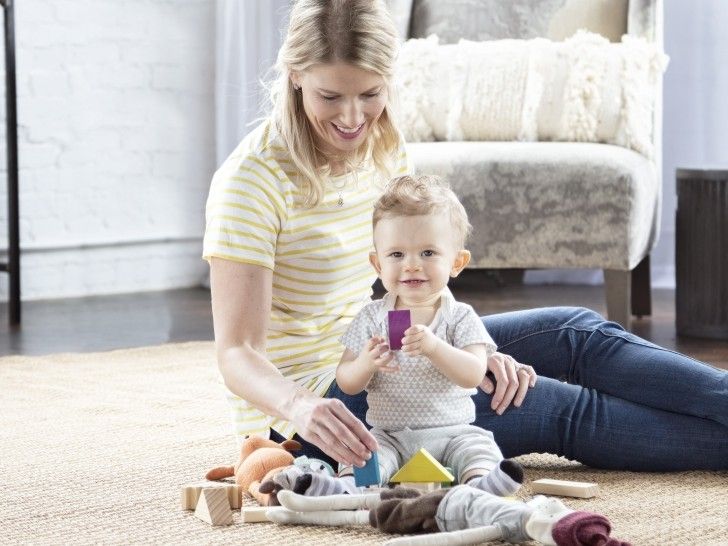
A woman sat on the floor with a small boy playing in front of her.

Tips for Encouraging Speech in Children

Parents can play a significant role in promoting language development.

1. Talk Often and Clearly
Narrate your day, describe what’s happening and ask questions to encourage verbal responses.

2. Read Daily
Books introduce new words, sentence structures and concepts. Encourage children to point at pictures and repeat words.

3. Sing Songs and Rhymes
Nursery rhymes and songs help children learn rhythm, pronunciation and memory while having fun.

4. Encourage Conversation
Respond to early words, expand on them and ask open-ended questions to stimulate dialogue.

5. Play Interactive Games
Games like “I Spy,” pretend play and storytelling build vocabulary, listening skills and conversational turn-taking.

6. Limit Passive Screen Time
Active communication is more beneficial than passive TV watching. Interactive play and reading are better for language growth.

7. Be Patient and Positive
Avoid correcting every mistake. Model proper pronunciation and grammar gently while celebrating progress.

Recognising Potential Speech Delays

While every child develops at their own pace, parents should consult a doctor or speech therapist if they notice:

• No recognizable words by age 18 months.
• Limited vocabulary growth or difficulty combining words by age 2.
• Trouble understanding simple instructions or responding to questions.
• Regression in previously acquired language skills.

Early intervention is key to addressing speech delays and supporting long-term communication skills.

The Role of Play in Speech Development

Play is an essential part of how children learn to speak.

• Pretend play – Encourages use of new words and sentence structures.
• Role-playing – Supports social communication and storytelling.
• Interactive toys and games – Can introduce vocabulary and reinforce language patterns.

Even everyday activities, such as cooking together or playing with blocks, provide natural opportunities for speech development.

Final Thoughts

Learning to speak is a remarkable milestone that involves listening, comprehension, imitation and social interaction. Understanding how children learn to speak helps parents provide a nurturing environment that promotes vocabulary growth, communication skills and confidence.
Through daily conversation, reading, singing and play, parents can support their child’s language journey, celebrate milestones and identify any areas that may require additional guidance. With patience, encouragement and a rich language environment, children can develop strong communication skills that form the foundation for lifelong learning and social interaction.

share:

Links

Follow Us

© 2025 Graco Children's Products. All Rights Reserved.

Nuna International B.V. Groenmarktkade 5 H, 1016 TA, Amsterdam, The Netherlands