

Graco Baby brand logo
A young baby lying down with a mum kissing its head. With the words Parents Connected written at the side and the Fox and the Moon logo in the bottom corner.
Why Your Baby Isn’t Broken (And Neither Are You)

The Truth About Infant Sleep and Parental Exhaustion

  • This post is written in collaboration with Graco as part of their Parents, Connected campaign, shining a light on the very real, very human toll of sleep deprivation in early parenthood. Find further resources and expert guidance at The Graco Village.
  • There’s a particular kind of exhaustion that no one quite prepares you for. Not the tired-after-a-long-week kind, or even the bone-deep fatigue of illness. This is something else entirely, a relentless, cumulative, identity-reshaping kind of tired that settles into your body and your brain and quietly changes everything.
  • If you’re in the thick of broken nights right now, you are not failing. Your baby is not broken. And you are most certainly not alone.
  • The Life You Had Before

  • Before a baby arrives, most of us take for granted a very particular luxury: the ability to meet our own basic needs. You could eat when you were hungry. Rest when you were tired. Process a difficult emotion without simultaneously trying to soothe another human being who is entirely dependent on you.
  • Sleep, specifically, was probably something you did without much thought. You drifted off. You woke up. Perhaps you even complained about needing more of it, not knowing what ‘needing more sleep’ would one day truly mean.
  • Then parenthood arrived, and with it came a seismic shift that goes far beyond the practical. It’s not just that you’re sleeping less. It’s that your nervous system is now permanently tuned into anotherperson’s needs, even in the moments when you’re supposed to be resting. That hypervigilance, that constant low hum of alertness, is exhausting in a way that a solid eight hours rarely fully resolves.
  • We talk about the logistical side of becoming a parent, the nappies, the feeds, the gear, but we talk far less honestly about the psychological and physiological transition that is happening underneath all of it. The shift from ‘person who sleeps’ to ‘parent who survives on fragments’ is enormous. And it is okay to grieve the version of rest you used to know.
  • Matrescence: The Birth of a Parent

    A mum sat up in bed smiling at the young baby she is holding.
  • There is a word for what you are going through, though it is only beginning to enter mainstream conversation: matrescence. Coined by medical anthropologist Dana Raphael in the 1970s and more recently championed by developmental psychologist Dr Aurélie Athan, matrescence describes the profound biological, psychological, social, and identity transformation that occurs as a woman becomes a mother (Athan, 2020).
  • Think of it as the mirror image of adolescence. Just as adolescence is a developmental transition that reshapes the brain, the body, the sense of self, and one’s relationship with the world, matrescence does the same, and yet we afford adolescents a great deal more patience, understanding, and cultural acknowledgement than we offer new mothers.
  • During matrescence, the brain undergoes measurable structural change. Research using neuroimaging has shown that grey matter volume shifts in the maternal brain during pregnancy and the postpartum period, with changes persisting for years after birth (Hoekzema et al., 2017). These changes are thought to support attunement to the baby, sharpening a mother’s ability to read her infant’s cues, respond to distress, and prioritise her child’s needs. The hypervigilance you feel at 3am is not anxiety, it is your neurobiology working exactly as it should.
  • But matrescence is not only neurological. It is also deeply personal. The woman who existed before motherhood does not disappear, but she is changed. Priorities shift, relationships are renegotiated, identity stretches to accommodate something enormous. And this process, which can feel disorienting and even grief-like at times, is entirely normal.
  • One of the most important things I can offer any parent reading this is permission: permission to find this hard, to feel lost inside the transition, to not yet feel like yourself again, and to know that those feelings do not mean something has gone wrong. They mean you are in the middle of something significant. And the middle of significant things is always the hardest part.
  • Understanding matrescence can be genuinely transformative for parents. When we name what is happening, when we give it context and weight, it stops feeling like personal failure and starts feeling like what it is: a rite of passage. You are not falling apart. You are becoming.
  • What Broken Sleep Actually Does to You
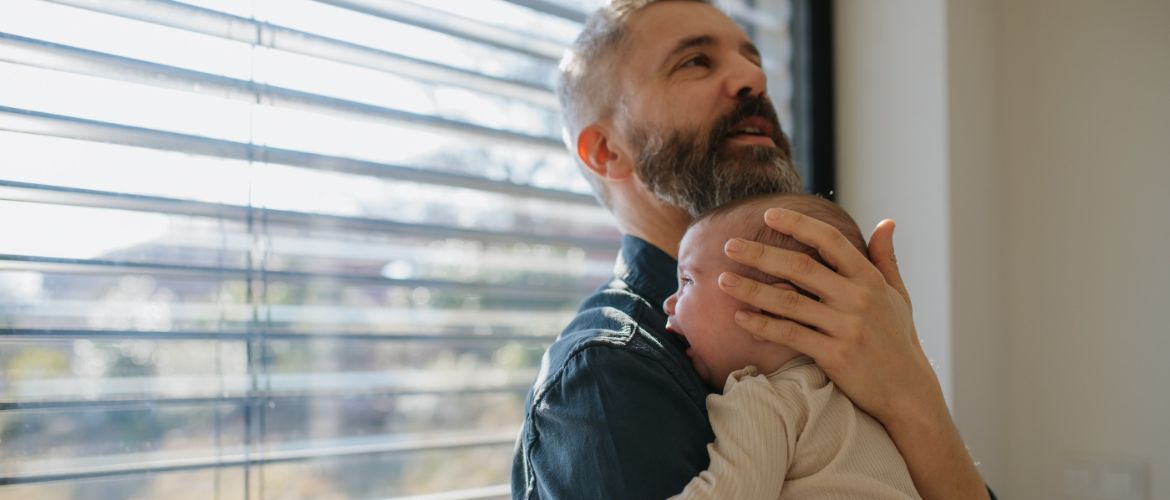
    A dad holding a crying baby against his shoulder supporting his head, with a window behind them.
  • Sleep deprivation is not a minor inconvenience. Research consistently shows that fragmented, insufficient sleep affects cognitive function, emotional regulation, immune response, physical recovery, and mental health, and in the postpartum period, those effects are compounded by hormonal change, physical recovery from birth, and the enormous psychological adjustment of becoming a parent (Dørheim et al., 2009).
  • When you are running on broken nights, your capacity for patience narrows. Your sense of perspective shrinks. Small things can feel insurmountable. You might find yourself crying in the kitchen at 3am and not entirely understanding why. You might feel a creeping disconnect from the version of yourself that felt competent and capable. You might wonder, quietly and with a kind of shame, whether you are actually cut out for this.
  • You are. I promise you, you are. But it is worth naming those experiences honestly, because the silence around them can make parents feel like they are uniquely struggling when, in reality, they are navigating one of the most physiologically and emotionally demanding periods of human life.
  • This is why I believe so strongly that supporting infant sleep has to begin with supporting parents. You cannot pour from an empty cup, and yet so much of the mainstream conversation around baby sleep is directed entirely at the baby, as though the parent is simply a variable to be optimised around, rather than a whole person who also needs care.
  • Why Infant Sleep Looks the Way It Does
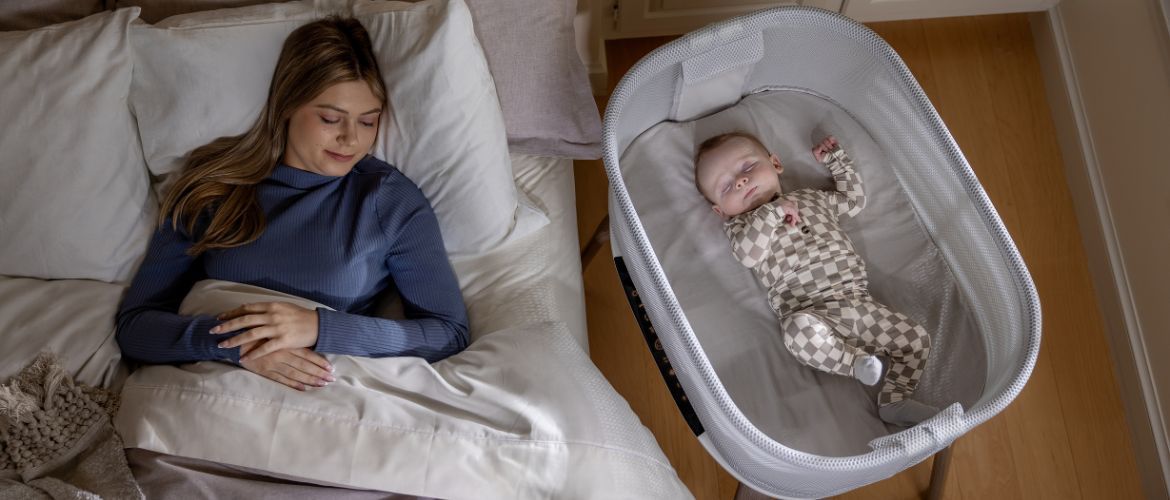
    A woman sleeping in bed with a baby sleeping in a bassinet at the side of her.
  • Here is something the baby books don’t always make clear enough: waking frequently in the night is biologically normal for infants. It is not a flaw. It is not a sign that something has gone wrong. It is, in fact, a sign that your baby’s brain and nervous system are doing exactly what they are supposed to do.
  • Human infants are born neurologically immature. Unlike many other mammals, they arrive in the world needing significant external co-regulation to help them feel safe, to stabilise their temperature and heart rate, to digest, to manage stress. Their sleep architecture is fundamentally different from that of an adult, with a much higher proportion of active (REM) sleep, shorter sleep cycles, and more frequent partial arousals between cycles (Grigg-Damberger, 2016).
  • These arousals are thought to be protective. Research has long associated light, arousable infant sleep with a lower risk of sudden infant death syndrome (Fleming et al., 1990). The biology that makes your baby a frequent waker is, in many cases, the same biology that keeps them safe.
  • None of this makes it easy. But it does mean that when your baby wakes at midnight and 2am and 4am, they are not being deliberately difficult. They are not manipulating you. They have not ‘forgotten’ how to sleep. They are being an infant, with all the developmental immaturity, the nervous system sensitivity, and the very human need for closeness that entails.
  • When Something Feels Like More Than Just ‘Normal Baby Sleep’

  • That said, and this matters, not all unsettled behaviour in babies is simply developmental. There is a wide spectrum between ‘normal infant sleep’ and ‘there is something here worth investigating further,’ and as a sleep consultant who has worked with thousands of families, I want to acknowledge both truths at once.
  • If your baby’s crying feels excessive, if they seem genuinely distressed rather than simply communicative, if they are difficult to settle no matter what you try, or if your gut is telling you something is not quite right, please listen to that instinct. Parents know their babies, and that knowledge matters.
  • There are a number of root causes that can contribute to a very unsettled baby, and which are often overlooked in conversations that focus solely on sleep habits or routines. These include:
    • Reflux and gastro-oesophageal discomfort. Silent reflux in particular is frequently missed because there is no visible vomiting. Babies with reflux may arch their back during or after feeds, seem uncomfortable when lying flat, feed frequently but never seem satisfied, or have disrupted sleep that appears worse in the early hours of the morning when stomach acid rises most easily. This is not a behavioural problem, it is a physiological one, and it deserves proper investigation.
    • Oral dysfunction. Tongue tie, lip tie, and other oral restrictions can significantly impact a baby’s ability to feed effectively, leading to frustration at the breast or bottle, trapped wind, and a baby who is frequently unsettled despite appearing to feed often. Many families I work with have had oral dysfunction as a missing piece of the puzzle, once it is identified and addressed, the ripple effects on sleep and settling can be profound. Oral dysfunction and the difficulties with feeding that it can bring is also a very common cause of reflux and colic. If something doesn’t feel right, skilled feeding support from an IBCLC and a thorough oral function assessment from a tongue tie practitioner could be very beneficial for you and your baby.
    • Birth tension. The birth experience, however it unfolded, can leave physical tension in a baby’s body, particularly in the neck, jaw, and cranial area. Babies carrying tension from a long labour, an instrumental delivery, or a very fast birth may be harder to settle, resistant to lying on their back, or uncomfortable in positions that place pressure on certain areas. This can also cause feeding difficulties, and bodywork from a suitably qualified practitioner, such as a paediatric osteopath or craniosacral therapist, is worth exploring if you notice these signs.
    • Infant temperament. Temperament refers to the biologically-rooted, relatively stable differences in how individual babies respond to the world around them. Researchers Thomas and Chess (1977) identified a cluster of temperament traits in infancy, including intensity of reaction, adaptability, and sensory threshold, that shape how easily a baby is soothed, how they respond to change, and how much stimulation they can tolerate before becoming overwhelmed.

  • Some babies are simply more sensitive than others. They may react intensely to noise, light, changes in routine, or the transition between sleep states. They may take longer to settle, need more physical closeness, and find the world a more overwhelming place than an easier-going baby in the same household might. This is not a parenting failure. It is not something that needs to be ‘fixed.’ It is a fundamental aspect of who your baby is.
  • What these babies need, and what the research consistently supports, is not less responsiveness, but more of it. Sensitive, high-need babies tend to thrive with predictable rhythms, lower-stimulation environments, lots of skin-to-skin contact, and a caregiver who is attuned to their particular cues. Understanding your baby’s temperament, and adjusting your expectations and approach accordingly, can be one of the most powerful shifts a family can make.
  • It is also worth noting that temperament is not destiny. Sensitive babies often grow into deeply empathetic, perceptive children and adults. The intensity that makes the early months challenging is frequently the same quality that, with the right support, becomes a profound strength.
  • Food intolerances and allergies. For breastfed babies especially, sensitivities to proteins passing through breastmilk, most commonly cow’s milk protein, can cause significant gut discomfort that impacts sleep and settling. Symptoms can include mucousy or green stools, eczema, excessive wind, and a baby who seems uncomfortable after feeds. If you notice these signs, please speak to your baby’s GP or Health Visitor for guidance and support.
  • I am not suggesting that every unsettled baby has a medical or physical issue. Many do not. But I have sat with enough exhausted, self-doubting parents who were told to simply ‘persist with sleep training’ or “wait it out” when their baby was in genuine discomfort, to know that it is worth asking the question.
  • Root cause investigation means looking at the whole picture of a baby’s health, feeding, nervous system, and history, and is at the heart of everything I do at Fox & The Moon. Because behaviour is always communication. And when we listen carefully enough, it usually tells us what we need to know.
  • With that being said, parents are often receiving so much conflicting advice about everything to do with their baby and it can feel overwhelming and hard to know what information to trust. I strongly believe that all parents deserve to be educated in what normal infant sleep looks like, how it evolves over the first few years and when to expect peaks and troughs. Having expectations rooted in evidence, science and biology, and not feeling pressured to ‘fix’ what is normal, can make the world of difference to our wellbeing as parents.
  • What Actually Helps

    A woman cradling a small baby against her chest, stroking its head.
  • If you are in the exhausted trenches right now, I want to offer something more useful than a list of sleep tips. The most helpful thing I can say is this: please do not go through this alone.
  • Community matters enormously in early parenthood. Connection with other parents who understand, truly understand, what it feels like to be this tired, this stretched, this uncertain, is not a luxury. It is a genuine support for your nervous system and your mental health. Finding your village, whether that is in person or online, is one of the most practical things you can do.
  • Beyond community, if something feels off with your baby, if the settling is harder than you feel it should be, if feeding seems difficult, if your instincts are nudging you toward more investigation, please advocate for yourself and for your baby with your health visitor, GP, or other relevant professional. You know your child. Your concerns are valid.
  • And if you would like personalised, holistic support that goes beyond routines and schedules, I would love to help. At Fox & The Moon, we work with families to understand the root causes behind sleep challenges, without ever resorting to sleep training methods that ask you to override your instincts or leave your baby to cry.
  • You Were Made for This

  • The exhaustion of early parenthood is real, and it is significant, and you are allowed to feel the weight of it and to find it hard. Impossibly so at moments. But I also want to say that the fact that you are here, reading, searching, trying to understand, that is not a sign of struggling. That is a sign of love in action.
  • Your baby is not broken, you are not broken, remember that you are two humans finding your way to each other, in the particular kind of darkness, loneliness and exasperation that only comes with the early hours, and the particular kind of love that you experience in these moments too.
  • References

    Athan, A.M. (2020) ‘Matrescence: Pregnancy as a liminal/transformational time,’ in Wenzel, A. (ed.) Oxford Handbook of Perinatal Psychology. New York: Oxford University Press, pp. 1–26. Available at: https://doi.org/10.1093/oxfordhb/9780190883997.013.28 (Accessed: 17 March 2026).

    Dørheim, S.K., Bondevik, G.T., Eberhard-Gran, M. and Bjorvatn, B. (2009) ‘Sleep and depression in postpartum women: a population-based study,’ Sleep, 32(7), pp. 847–855. Available at: https://doi.org/10.1093/sleep/32.7.847 (Accessed: 17 March 2026).

    Fleming, P.J., Gilbert, R., Azaz, Y., Berry, P.J., Rudd, P.T., Stewart, A. and Hall, E. (1990) ‘Interaction between bedding and sleeping position in the sudden infant death syndrome: a population based case-control study,’ BMJ, 301(6743), pp. 85–89. Available at: https://doi.org/10.1136/bmj.301.6743.85 (Accessed: 17 March 2026).

    Grigg-Damberger, M.M. (2016) ‘The visual scoring of sleep in infants 0 to 2 months of age,’ Journal of Clinical Sleep Medicine, 12(3), pp. 429–445. Available at: https://doi.org/10.5664/jcsm.5600 (Accessed: 17 March 2026).

    Hoekzema, E., Barba-Müller, E., Pozzobon, C., Picado, M., Lucco, F., García-García, D., Soliva, J.C., Tobeña, A., Desco, M., Crone, E.A., Ballesteros, A., Carmona, S. and Vilarroya, O. (2017) ‘Pregnancy leads to long-lasting changes in human brain structure,’ Nature Neuroscience, 20(2), pp. 287–296. Available at: https://doi.org/10.1038/nn.4458 (Accessed: 17 March 2026).

    Thomas, A. and Chess, S. (1977) Temperament and Development. New York: Brunner/Mazel.

    share: